Quick answer
Give the person a decision to own, tell them what would bring it back to you, and agree when you want to hear how it went. Under pressure, keep those boundaries visible. If the situation stays inside them, let the person make the call. If the facts cross a boundary, ask them to bring the new information and their recommendation.
What I missed on a 90-day launch
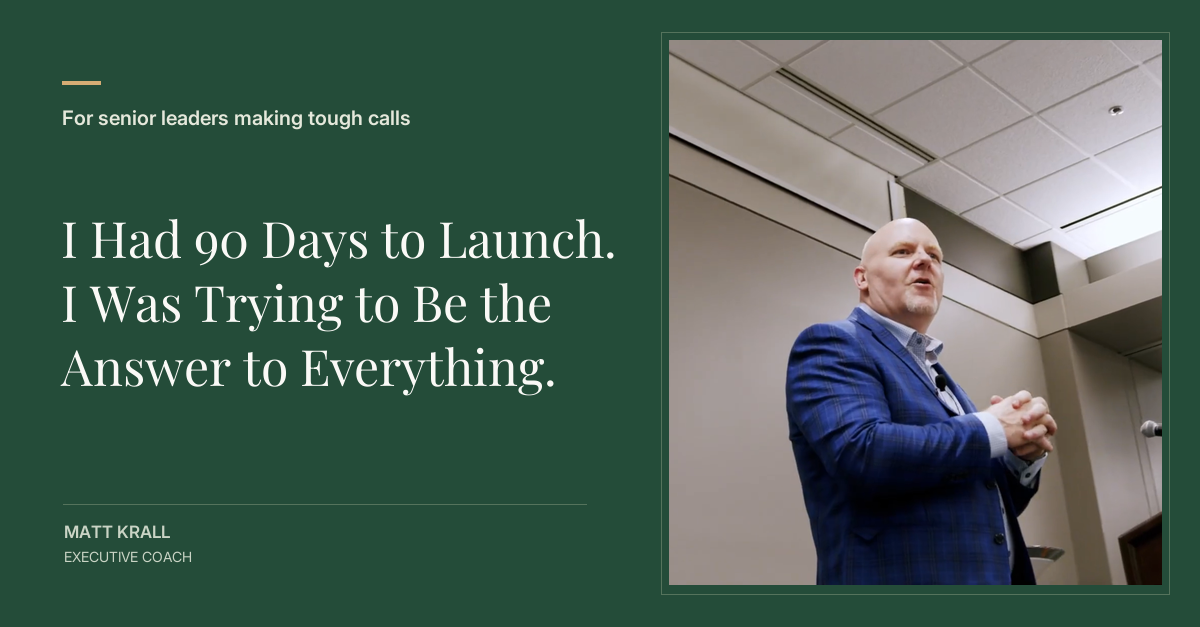
I had 90 days to open a new operation on the other side of the country. We had to hire the team and get the site running. I wanted to make the date, and I thought staying close to every decision was the responsible way to do it.
I put my head down and picked up the pace. What I didn’t see was what that pace was doing to the people around me. I had hired capable people and was still acting as if the work depended on how much I could carry myself.
A teammate pulled me aside. He could see the team was strong enough to carry the load if I gave them room. I had been measuring my contribution by my own output. He was paying attention to what happened to the people around me when I took on too much.
When I was reactive, the team pulled back. When I came in clearer and steadier, they had more room to do their work. We hit the launch date. That launch was one of several experiences that shaped how I work with leaders today.
Start with one decision your team makes often
- Name the decision, not just the task. “Handle the vendor renewal” could mean gather quotes, recommend a choice, or approve the renewal. Say which one you’re handing over. If the person can approve it, say so before the quote arrives.
- Give them a reason to come back. For example: “If the scope stays the same and the price is within budget, you can approve it. If either changes, bring me the difference and what you recommend.” The exact line will vary with the decision. The person should be able to repeat it in their own words.
- Agree when to check in. A short review after the decision can tell you whether the boundary worked. If you insert yourself halfway through, ask whether something materially changed or whether the pressure is making you uncomfortable with not having the answer yet.
What to watch for when the pressure rises
Say the director forwards the renewal anyway. Before you answer yes or no, ask, “Which part is outside the boundary we agreed?” If nothing is outside it, ask what would help them make the call. You might find you left something unclear, or that you previously took back a similar decision and they remember it.
There are times to step in. If the contract includes a liability change or a commitment they can’t authorize, take the part that requires your judgment. Be clear about which part stays with them. If you take back the whole decision every time one condition changes, they’ll learn to wait at the first sign of uncertainty.
I talked about another version of this in Unicorn Talks. When the operating plan became too crowded to use, we narrowed what mattered. The same discipline helps here: give people enough clarity to act without listing every situation they might face. At Elevate You, we put that into our team leadership work. See how to set decision-making rules for a team.
FAQ
What decisions should a senior leader keep?
Keep the decisions you’re formally accountable for and those outside the authority you’ve given. Tell people what requires escalation and what they can do without asking.
What if the person chooses differently than I would?
Ask them to explain how they weighed the options. If their choice is within the agreed boundary, a different choice is not automatically a mistake.
How do I know delegation is working?
Look at the next few similar decisions. Note which ones came back and why. You want real exceptions to reach you and routine calls to stay with the person who owns them.
Take the 15-minute Leadership Identity Audit if you want to look at a pattern that shows up in how you lead under pressure. It’s self-guided.